
Wood Pellet Production Line
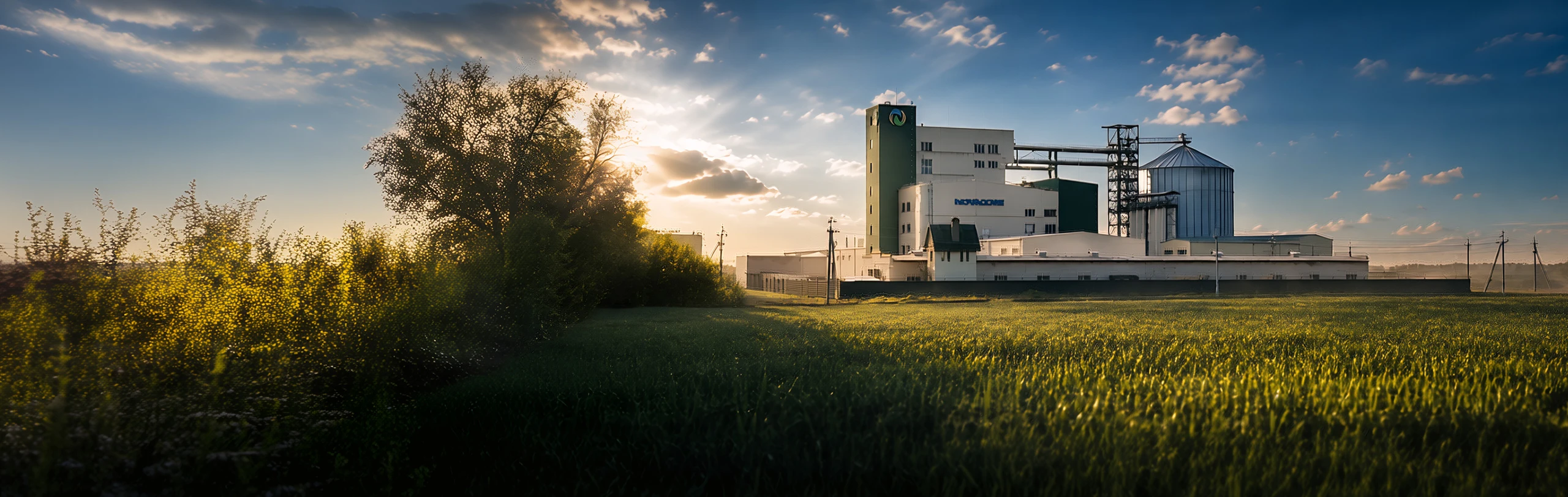
According to different customer needs, RICHI designs different equipment models.
Wood Pellet Line
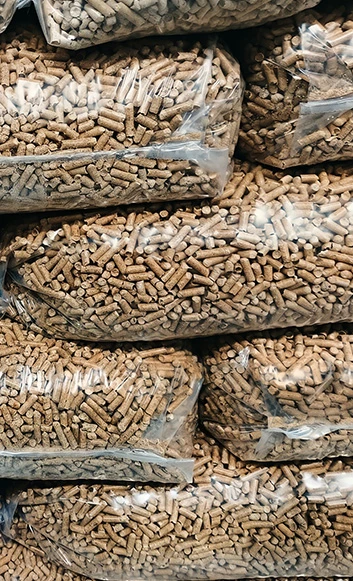
RICHI’s wood pellet production line converts raw materials such as sawdust, wood chips, wood shavings and forestry residues into high-density biomass fuel pellets.

Product Overview
As a full-set production system integrating crushing, drying, pelleting, cooling, screening and packaging, it caters to fuel transport vehicles, power plants, heating stations and district heating factories. The core equipment is the ring-die wood pellet mill, which can process a broad spectrum of raw materials to produce biomass pellets.
.webp)
Videos of RICHI Wood Production
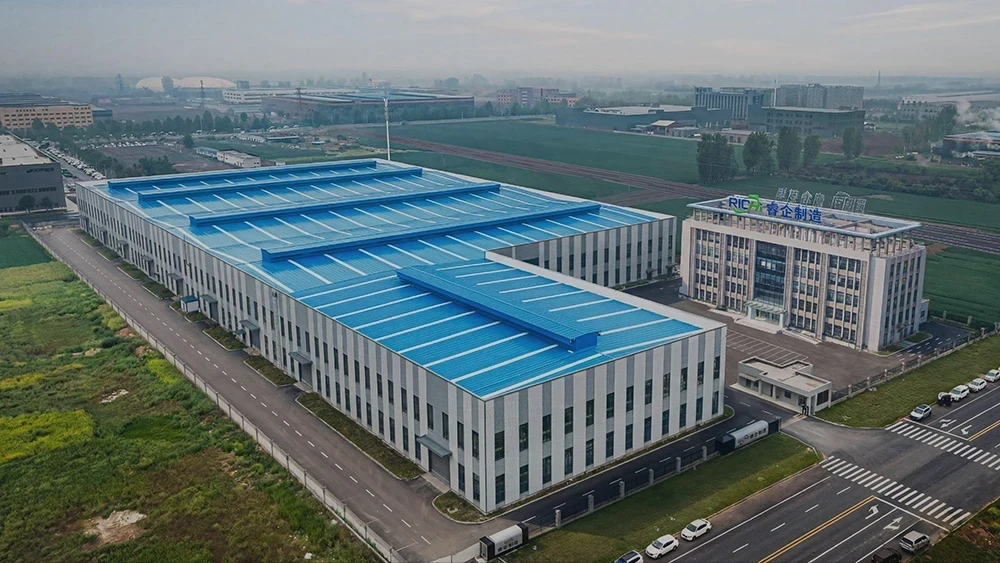
RICHI features spacious factory premises, a tidy office environment and complete production lines.

Why Choose RICHI?
Our story originates from the Central Plains, where we started with one simple mission: to build reliable, premium equipment.
The Process of Producing Wood Pellet
Our equipment is capable of supporting an entire feed production line.

Biomass Wood Pellet Line In Vietnam
Our high-quality particles are visible.
.webp)
According to different customer needs, RICHI designs different equipment models.
Production Workflow
RICHI’s wood feed production line features standardized and seamlessly coordinated production workflows.
01
Raw Material Processing: Chipping & Crushing
This is the primary pre-treatment procedure before formal production. All logs, tree branches, large wood planks and furniture offcuts go through this stage. The finished powder has uniform particle sizes free of large wood chunks, preventing blockages in downstream pellet mills.
The procedure consists of two optional processing segments:
Chipping: Logs and thick branches are fed into a wood chipper and cut into 2–4cm wood chips, solving the issue of oversized feedstock failing to enter crushers.
Crushing: Wood chips, branches and shavings are sent into a hammer mill and pulverized into fine wood powder with diameters ranging from 0.05mm to 3mm, meeting the fineness requirements for pelleting.
02
Drying
Freshly crushed wood powder naturally carries a moisture content of 20% to 40%. Excess moisture makes proper pellet forming impossible, so dehydration via a rotary dryer is mandatory — this step is decisive to pellet quality.
RICHI’s proprietary three-cylinder rotary dryer facilitates full contact between hot air and wood powder to continuously remove moisture. The target outlet moisture content is controlled between 10% and 12%, the optimal range for pelleting. Too much moisture results in fragile, crumbly pellets, while overly dry feedstock generates excessive dust and accelerates wear on ring dies.
The entire drying system is equipped with dust removal units to minimize flue gas emissions and fully comply with environmental regulations.
03
Pelleting
Dried wood powder is conveyed to the ring-die pellet mill, the heart of the whole production line. Internal rollers apply heavy pressure to the wood powder, activating lignin within the timber to soften and act as a natural binder. The material is then extruded through die holes to form solid pellets.
RICHI equips each line with MZLH series ring-die pellet mills, capable of producing pellets of 6mm, 8mm, 10mm and 12mm diameters to fit residential fireplaces, industrial boilers and power plant fuel supplies. The extrusion process operates in a fully sealed environment with no extra adhesives required, yielding compact pellets resistant to breakage.
04
Cooling
Fresh pellets extruded from the mill reach temperatures of 70–90°C. At such high temperatures, pellets remain soft and prone to sticking together or cracking during storage. Cooling pellets down to ambient temperature drastically improves product quality and cuts material loss.
Hot pellets are transferred to a counterflow cooler, where cold air flows opposite to the direction of pellets, evenly bringing their temperature down to room temperature and stripping excess surface moisture. After cooling, pellet hardness rises significantly, slashing breakage rates during transportation and storage by 80%.
05
Screening
Cooled pellets enter a vibrating screener fitted with double-layer screens to separate qualified finished pellets and recover waste powder:
The upper screen filters out overlong connected pellet fragments.
The lower screen sifts fine powder and crumbs generated during production.
Intact, standard pellets move onward to packaging, while screened powder and wood scraps travel back to the pellet mill via a return pipeline for re-pelletizing. Zero raw material waste maximizes overall output and profit margins.
06
Packaging
Qualified finished pellets are automatically transported to packaging stations, where fully automatic weighing scales deliver precise metering and sealing. Multiple sealing methods are available, including heat plastic sealing, stitching and hybrid sealing.
The weighing precision of the equipment stands at ±0.2kg, with tight seals to stop powder leakage. Packaged pellets can be directly stacked in warehouses or loaded onto trucks for delivery.
RICHI Crafted, Fully Trusted.
Related Equipment
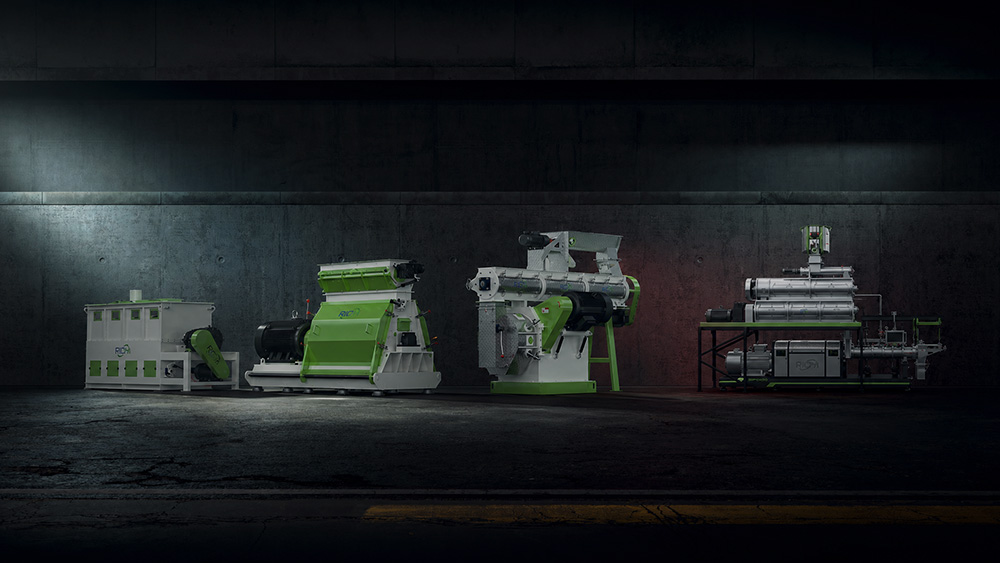
RICHI’s wood feed production line is equipped with a full array of well-engineered machinery, each with unique features and dedicated functions.
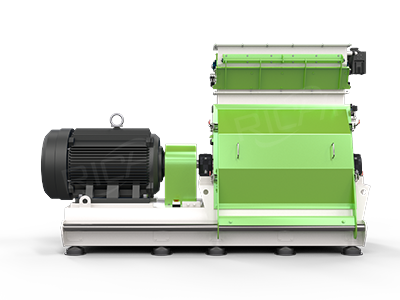
Grinder Machine
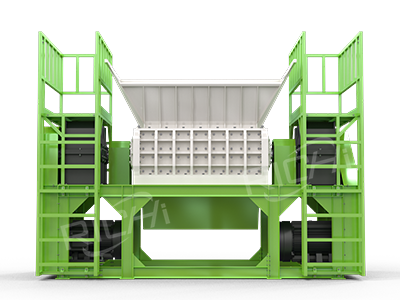
Shredder Machine
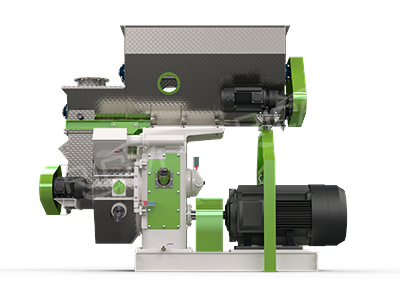
Biomass Pellet Machine
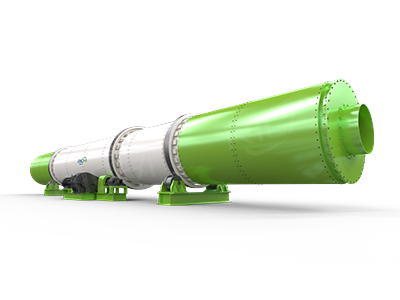
Dryer Machine
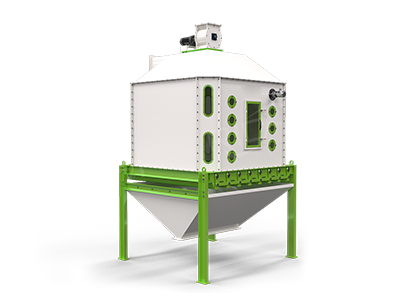
Pellet Cooler Machine
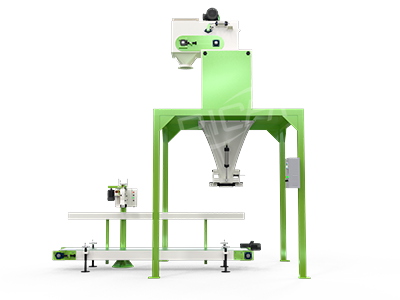
Automatic Packing Machine
RICHI Crafted, Fully Trusted.
Project Cases
Numerous practical successful projects testify to the reliable manufacturing quality of RICHI.
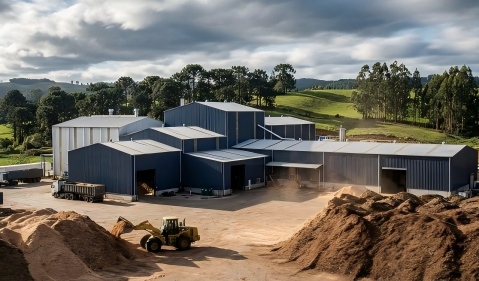

Bavaria, Germany
High-Grade Hardwood Pellet Plant
- Raw Materials: Hardwood shavings, furniture factory offcuts (oak / beech)
- Production Capacity: 2.5 tons per hour (ENplus A1 fireplace grade)
- Equipment Configuration: MZLH520 pellet mill (90kW) + precision drying system + counterflow cooler + vibrating screener + fully automatic packaging machine
- Floor Space: Main workshop measuring 16m × 13m × 6m, around 208 m²; approximately 800 m² including storage areas
- Manpower Requirement: 3 staff per shift (1 central control operator, 1 patrol inspector, 1 packaging worker)
- Total Installed Power: 173 kW
- Commissioning Date: January 2024
- End Uses: High-end fireplaces, villa heating, export to the EU
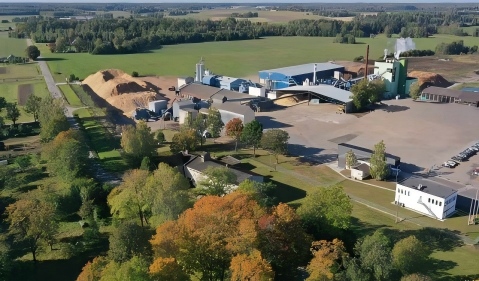
Biobío Region, Chile
Forest Residue Pellet Plant
- Raw Materials: Radiata pine sawdust, wood chips, wood shavings (feedstock jointly supplied by 40 sawmills)
- Production Capacity: 7–8 tons per hour
- Equipment Configuration: 2 × MZLH768 pellet mills + large hammer mill + three-cylinder dryer + counter-flow cooler + automatic packaging system
- Floor Space: 1,260 m² enclosed production plant (excluding outdoor stockyards)
- Manpower Requirement: 5–6 staff per shift (1 central control operator, 2 patrol inspectors, 2 packaging workers, 1 quality inspector)
- Total Installed Power: Roughly 590 kW
- Commissioning Date: September 2023End Uses: Industrial boilers, residential heating, domestic sales across South America
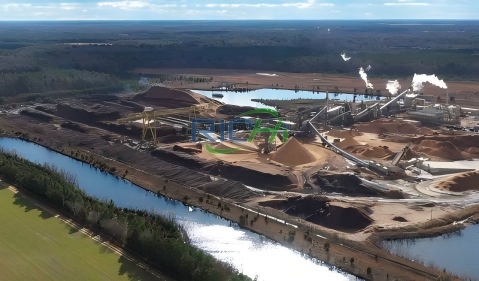
Georgia, USA
Fully Automatic Wood Pellet Plant
- Raw Materials: Pine / poplar sawdust, logging residues from forest clear-cutting
- Production Capacity: 10 tons per hour (24-hour continuous operation, daily output of 240 tons)
- Equipment Configuration: 2 × MZLH858 pellet mills (250 kW each) + wood chipper + hammer mill + large three-cylinder dryer + cooling unit + screener + automatic ton-bag & 25 kg bag packaging equipment
- Floor Space: 3,000–3,500 m² (including raw material yard, production workshop and finished goods warehouse)
- Manpower Requirement: 8 staff per shift (1 central control operator, 3 patrol inspectors, 2 packaging workers, 1 maintenance technician, 1 quality inspector)
- Total Installed Power: Around 1,125 kW
- Commissioning Date: June 2023
- End Uses: Power plant fuel, exports to Europe (ENplus certified)
Core Advantages
The following three core advantages make RICHI your optimal choice for equipment procurement.
RICHI Crafted, Fully Trusted.
Customer Testimonials
Positive feedback from customers serves as the prime driving force behind RICHI’s continuous progress.
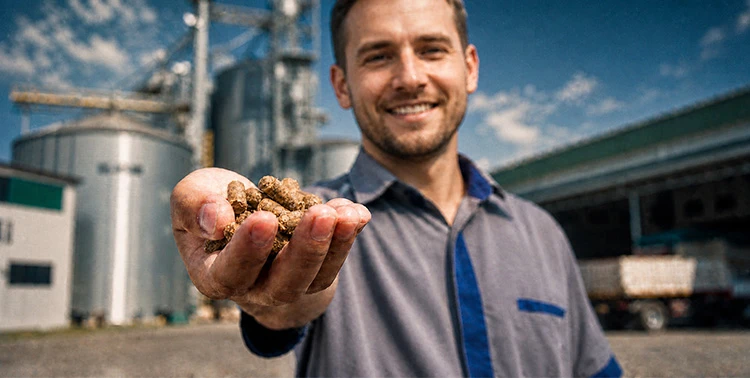
We needed high-purity, low-ash, crack-free fireplace pellets. RICHI’s 2.5-ton wood pellet production line runs on a total power of 173 kW, consuming roughly 20% less electricity than comparable European equipment. The PLC-controlled fully automated line only needs three on-site staff. Our pellets achieve ash content below 0.8% and moisture under 7%, consistently satisfying ENplus A1 criteria and commanding premium prices on the German domestic market. Their installation team demonstrated outstanding professionalism and completed full delivery within 45 days.
Emma Johnson
Bavaria, Germany
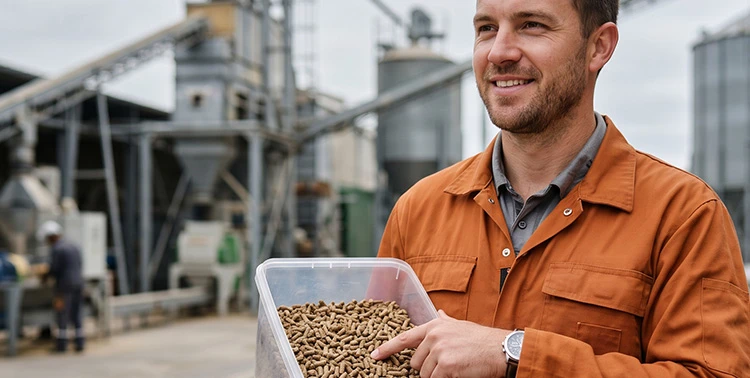
Waste materials from our 40 partner sawmills could only be incinerated before. Now we process them into pellets with an annual sales volume of 20,000 tons. RICHI’s 7–8-ton line with a total power load of 590kW features robust engineering and can run continuously for 30 days without major overhauls. The 1,260 m² workshop follows a well-planned layout for smooth material circulation. Our pellets have a density above 650kg/m³ and a calorific value of 4,600 kcal, fully meeting market demand in Chile and neighboring countries, generating a profit of approximately 180 RMB per ton.
Cooperative Director
Biobío Region, Chile
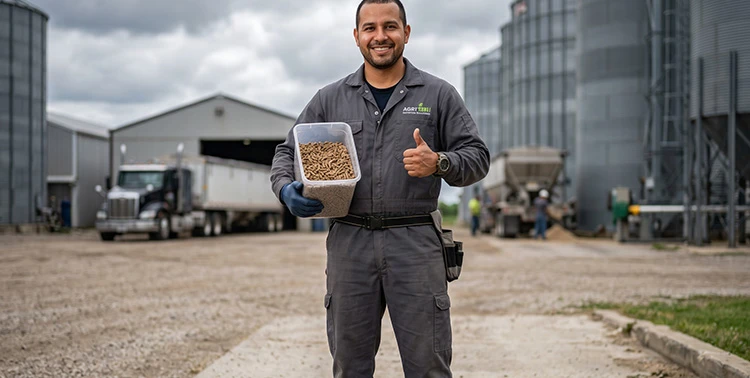
Our 10-ton wood pellet production line runs at a total power of 1,125kW with full automation, requiring almost no manual intervention from raw material feeding to finished product packaging. The 3,000+ m² workshop features spacious logistics aisles that easily accommodate forklifts and delivery trucks. A shift team of eight workers can sustain stable round-the-clock production. Our pellets maintain moisture levels consistently below 8% and deliver a calorific value exceeding 4,800 kcal, earning exemption from inspection by European buyers. RICHI’s turnkey service eliminates all operational headaches; installation and commissioning finished within 60 days. Since launch, the annual equipment failure rate has stayed below 1.5%, proving exceptional reliability.
Operations Director
Energy Company, Georgia, USA
Your challenges, our solutions.
FAQ
Your concerns are always RICHI’s top priority.
What types of raw materials can your wood pellet line process? What are the moisture requirements?
The line handles all kinds of wood waste including sawdust, wood shavings, wood chips, tree branches, bark, furniture offcuts and mushroom substrate blocks. Small amounts of agricultural residues such as straw and rice husks can also be blended in.
Optimal moisture range for pelleting: 10%–12%
Incoming raw materials with natural moisture between 20%–40% can be dried down to the standard range using our rotary dryers.
Feedstock with moisture under 8% causes heavy pellet cracking, while moisture above 15% prevents proper forming and leads to mill blockages.
Can you provide full turnkey projects covering design through installation and commissioning?
Absolutely. RICHI offers comprehensive turnkey services as outlined below:
Free services: site layout design, production flow planning, equipment selection and investment budget calculation
Manufacturing, factory pre-testing and global logistics of all equipment
On-site installation, commissioning and trial production conducted by overseas engineers (45–60 working days)
Free 1–2 day hands-on training for equipment operation and maintenance until operators master all skills
Supply of CE, ISO and SGS certifications to support cross-border exports
What quality standards can your finished pellets meet? Are they export-eligible?
Our wood pellet production lines steadily manufacture premium pellets compliant with EU ENplus A1 / A2 fireplace standards with the following specifications:
Diameter: 6–8mm; Length: 20–40mm
Moisture content: ≤8%
Ash content: ≤0.8%
Bulk density: ≥650kg/m³
Calorific value: ≥4,600 kcal
Finished pellets can be directly exported to European nations, Japan and South Korea and pass customs clearance without extra inspections.

